





Royal Belgian Institute for Space AeronomyPhysics and chemistry of the atmosphere of the Earth and other planets, and of outer space.
Space Physics | 2023-2024
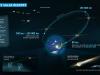
After more than 24 years in orbit, the Cluster mission is coming to an end on Sunday 8 September 2024.
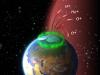
We extrapolated the current oxygen escape rate to Earth’s past conditions, considering solar and planetary evolution, to determine the oxygen loss from Earth.
With the Atmospheric Radiation Interaction Simulator (AtRIS), we can simulate the ionisation and dose rates induced by cosmic rays in different conditions.
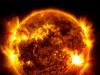
The strongest geomagnetic storm for the last 20 years appeared during the night of 10 to 11 May 2024.
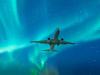
PECASUS monitors space weather phenomena and provides advisory information on their expected impact.
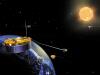
Dataset that provides for the first time a classification of the four ESA Cluster satellites’ location in geospace regions from 2001 to 2022.
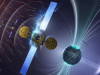
BIRA-IASB has developped a prototype service that provides now- & forecasts on the risk for charging during magnetic storms.
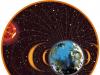
Model based on an artificial neural network to investigate and forecast the near-Earth high-energy particles behavior trapped in the magnetic field.
Open access to experimental facilities, data and models, standardised data products, and training services.
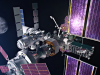
REENOM team focuses on improving the understanding of the lunar radiation environment and its impacts on both hardware and humans.
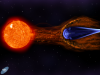
PSP found a new population of protons traveling at very high speeds which we study with numerical simulations.
Even ten years after Rosetta’s historic rendezvous with Comet 67P, Rosetta’s ROSINA discoveries continue to (re)shape cometary science.
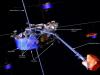
Spacecrafts probe in-situ the Venus and Earth plasma environment. Data analysis reveals increased magnetic fluctuations and strong electromagnetic waves.