



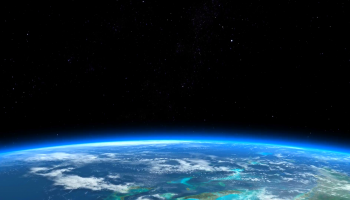
We know the drill. Economic and industrial growth are the cause of rising levels of carbon dioxide (CO2) in the Earth’s atmosphere. This being a greenhouse gas, it traps heat from the sun and causes the atmosphere to warm up gradually, wreaking havoc in the fragile Earth system, its flora and fauna. Surprisingly, CO2 has another side effect, a cooling effect. Stop yourself, however, if you think this could compensate for global warming.

Royal Belgian Institute for Space AeronomyPhysics and chemistry of the atmosphere of the Earth and other planets, and of outer space.
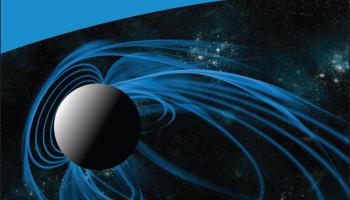
A new book on the magnetospheres in our solar system has been published by Wiley. It has been co-edited by our BIRA-IASB colleague Dr. Romain Maggiolo. Based on 13 years experience in the “Magnetosphere” research team within the “Space Physics” department, he was approached to be the main editor of this book.
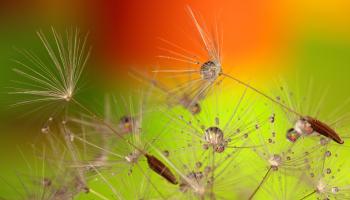
Acid rain is over ten times more acidic than pure rainwater, causing damage to structures and buildings, but most importantly to vegetation (e.g. food crops). BIRA-IASB researchers contributed to a study, lead by the ULB and the German FZJ, which finally sheds light on the formation mechanism of formic acid, a substance that has an impact on the acidity of the atmosphere and rainwater.
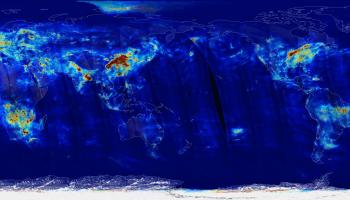
With an ever-growing world population, and the ongoing increase in energy consumption, the effects of human activity on the natural environment have never been more relevant. In order to understand and mitigate the resulting problems, such as atmospheric pollution (air quality) and climate change, the whole Earth system (land, oceans, atmosphere and the interactions between them) needs to be carefully monitored.
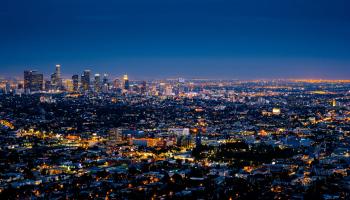
Although the emissions of key air pollutants caused by human activities (traffic, industry etc.) have sharply decreased in response to COVID-19 disruptions, the atmospheric levels of secondary pollutants like ozone have been found to increase in several places around the world. BIRA-IASB researchers contributed to the first global model study aimed at elucidating and quantifying the causes for this apparent paradox.
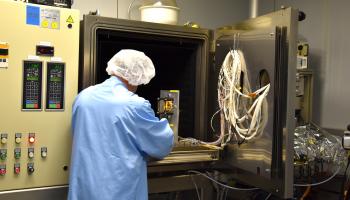
BIRA-IASB is preparing a new space instrument, 3DEES, in consortium with the Université Catholique de Louvain and QinetiQ Space, to study the Earth's space radiation environment on board ESA's PROBA-3 satellite.